How does artificial intelligence enter a human thought that is already complete?
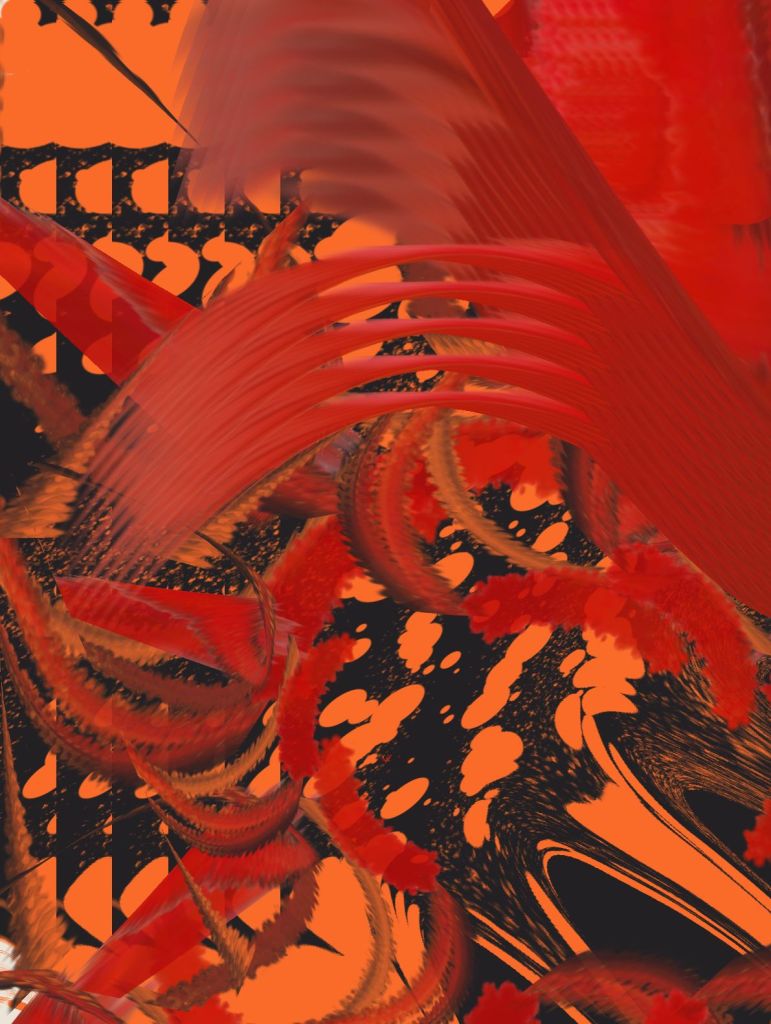
For much of my life, I have created abstract paintings and images.
Abstraction has always allowed me to work in a territory that exists before language. A place where color, movement, tension, memory, and intuition can coexist without having to become something immediately recognizable.
HYBRID ALCHEMY
My abstract works were never intended as unfinished images waiting for a subject.
They were already complete.
Each painting possessed its own internal balance, its own rhythm, and its own form of thought. Even when no figure was clearly visible, every line, color, space, and movement belonged to a deliberate visual structure.
Hybrid Alchemy begins with a question.
What happens when artificial intelligence is introduced into an artwork that has already reached its own conclusion?
Can a machine enter a finished human thought without erasing it?
Can it continue that thought, misunderstand it, transform it, or reveal possibilities that were already present but remained invisible?
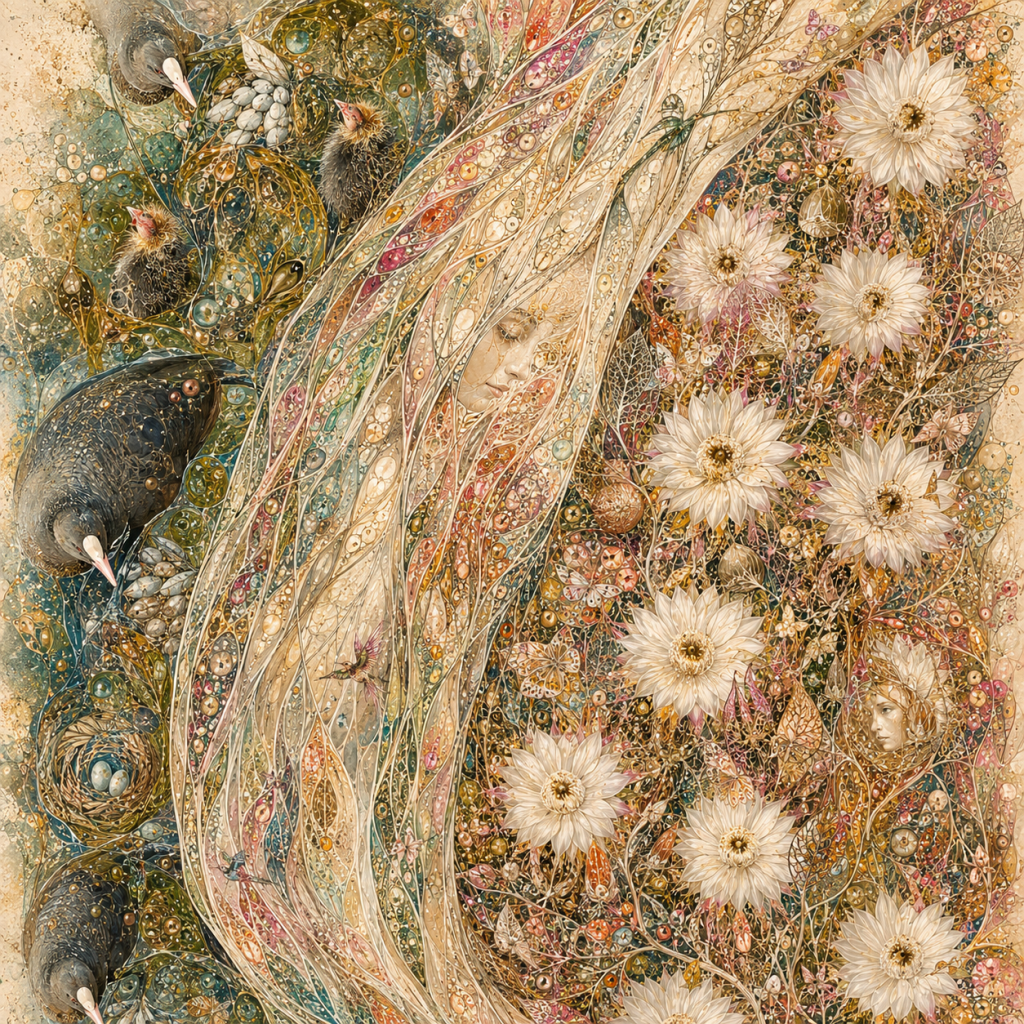
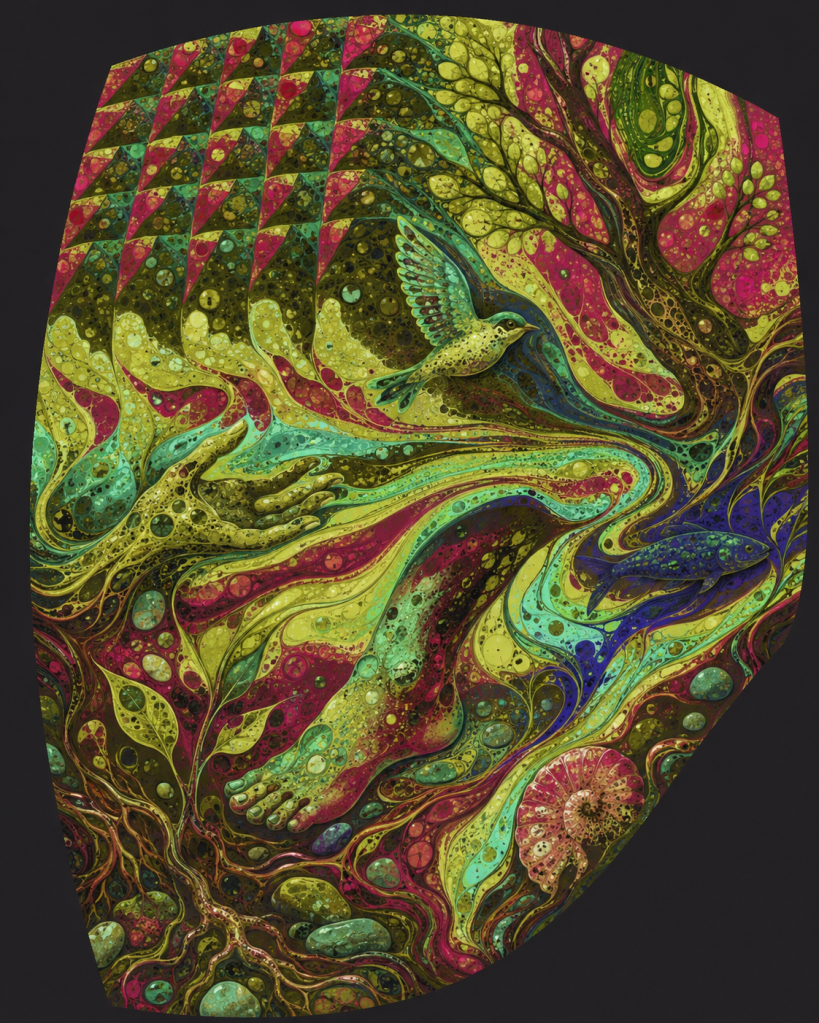
The Completed Painting as a Beginning
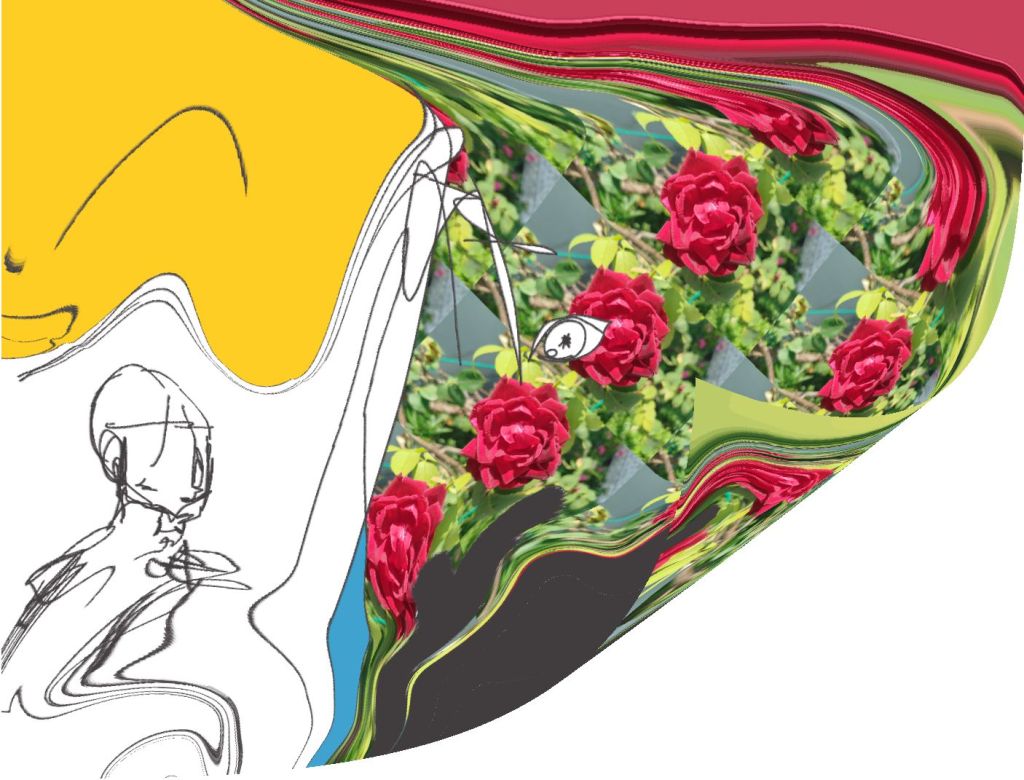
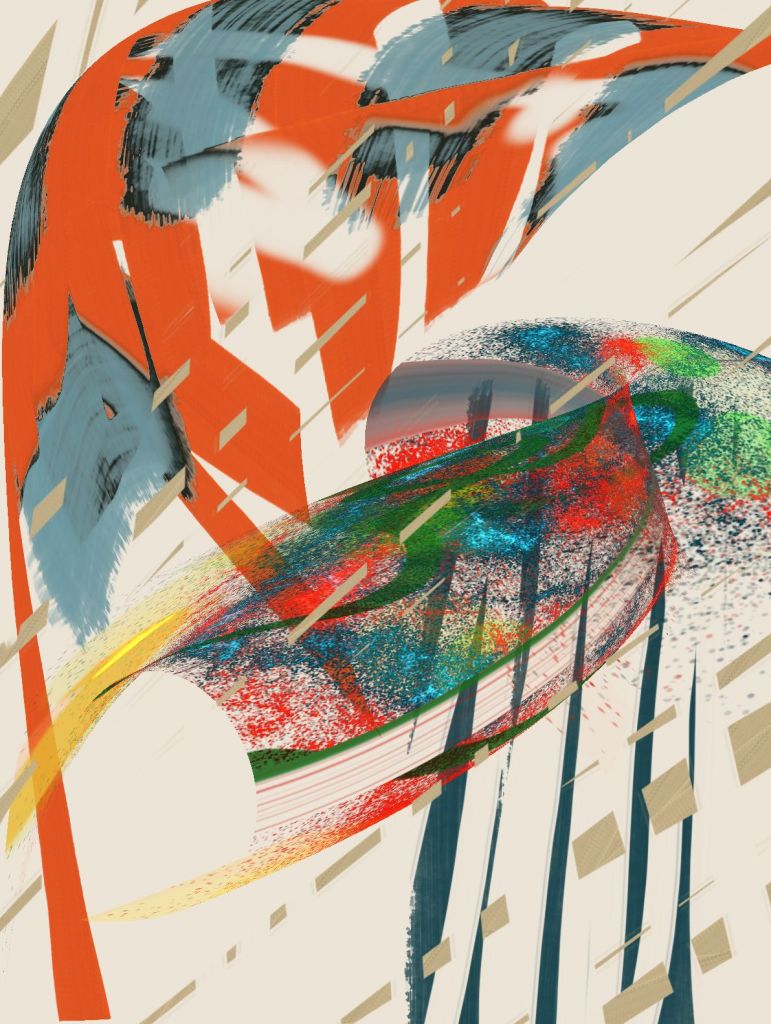
Every work in Hybrid Alchemy begins with one of my original abstract paintings or visual compositions.
The source image is not a preliminary sketch.
It is not an empty surface.
It is not a random stimulus waiting to be completed.
It is an autonomous work, created through human intention and already capable of existing independently.
I then present this finished image to an artificial intelligence trained on my painterly language.
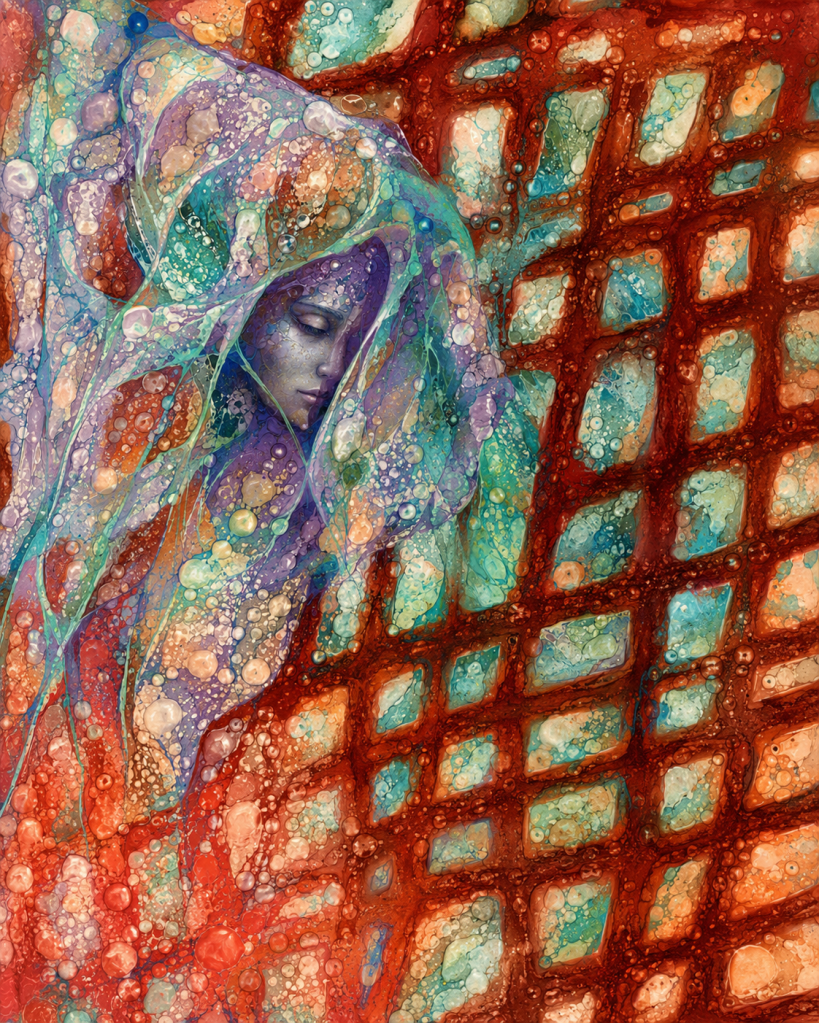
The model has learned from the colors, cellular structures, flowing forms, organic membranes, transparencies, filaments, faces, animals, landscapes, and visual relationships that recur throughout my work.
The artificial intelligence does not encounter the painting from outside my visual world.
It enters through a language derived from it.
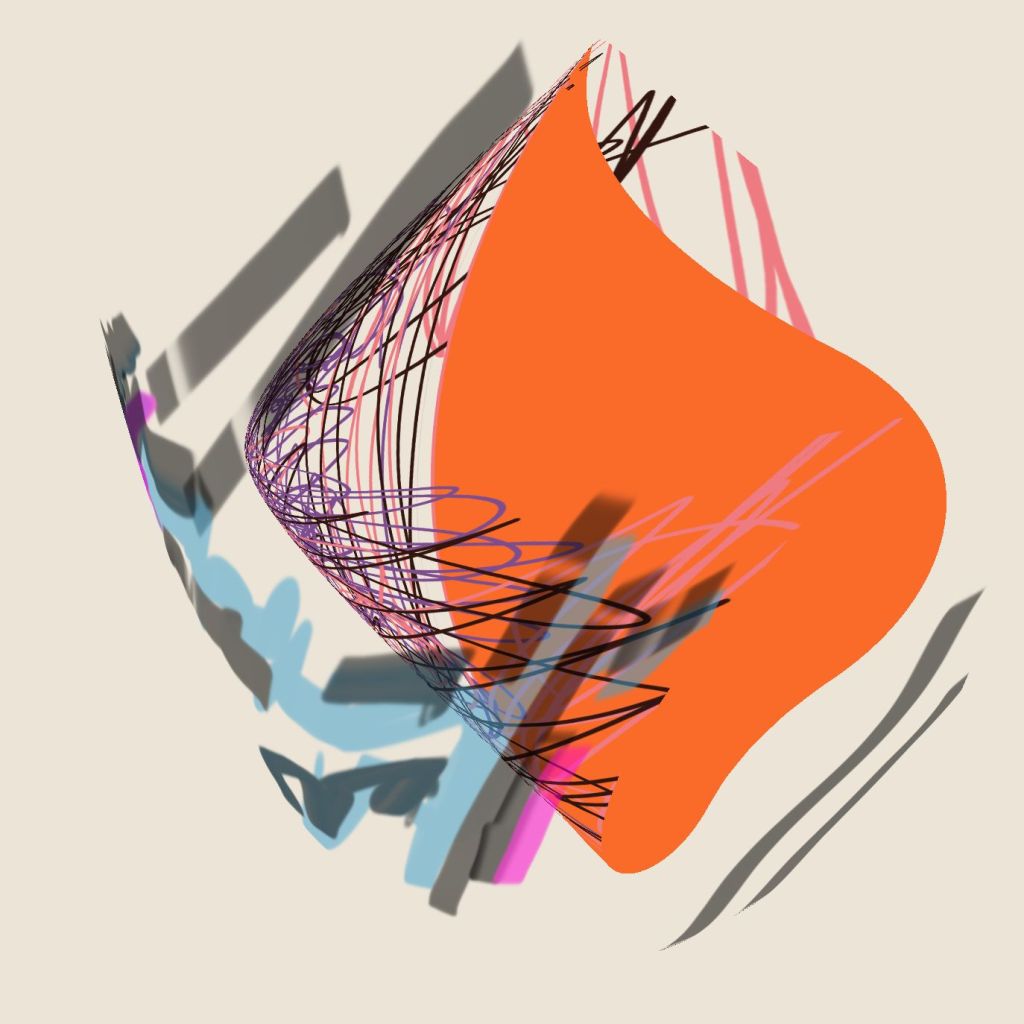
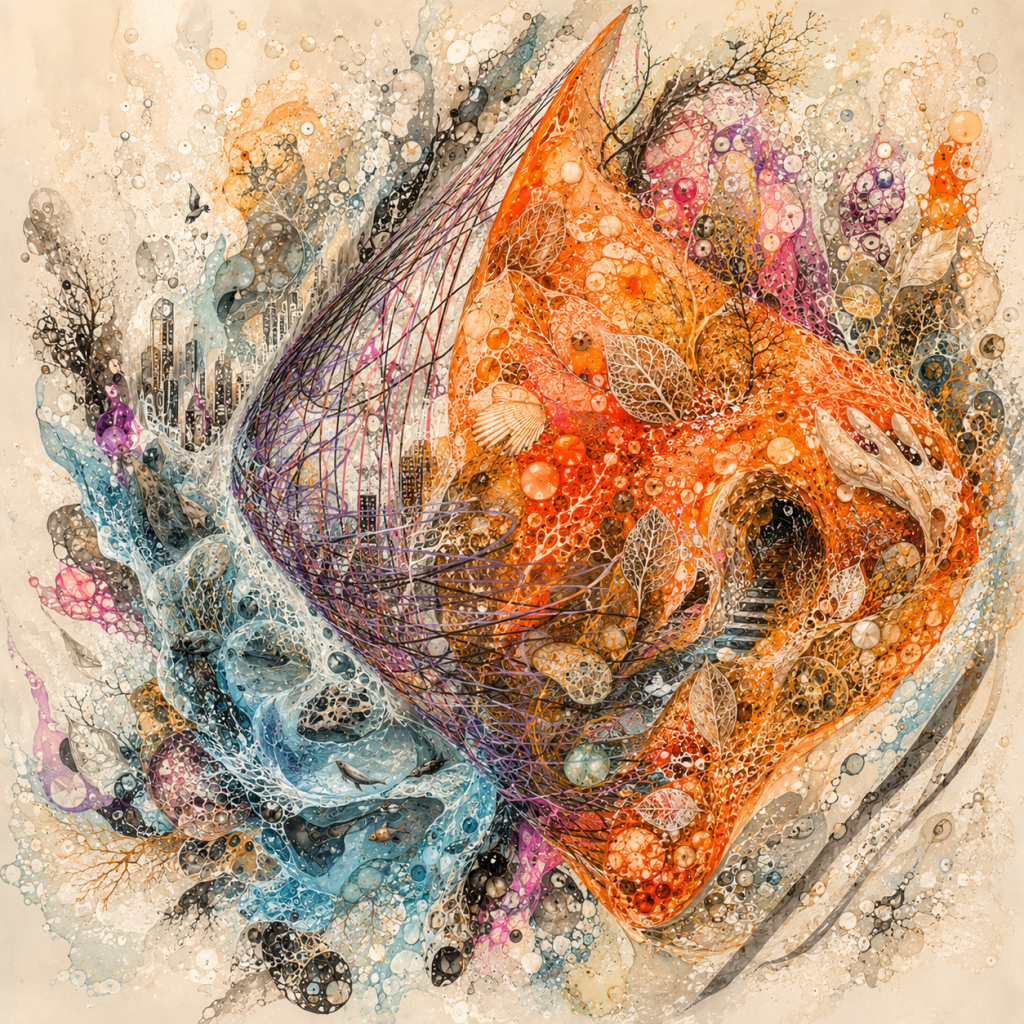
Interpreting a Human Thought
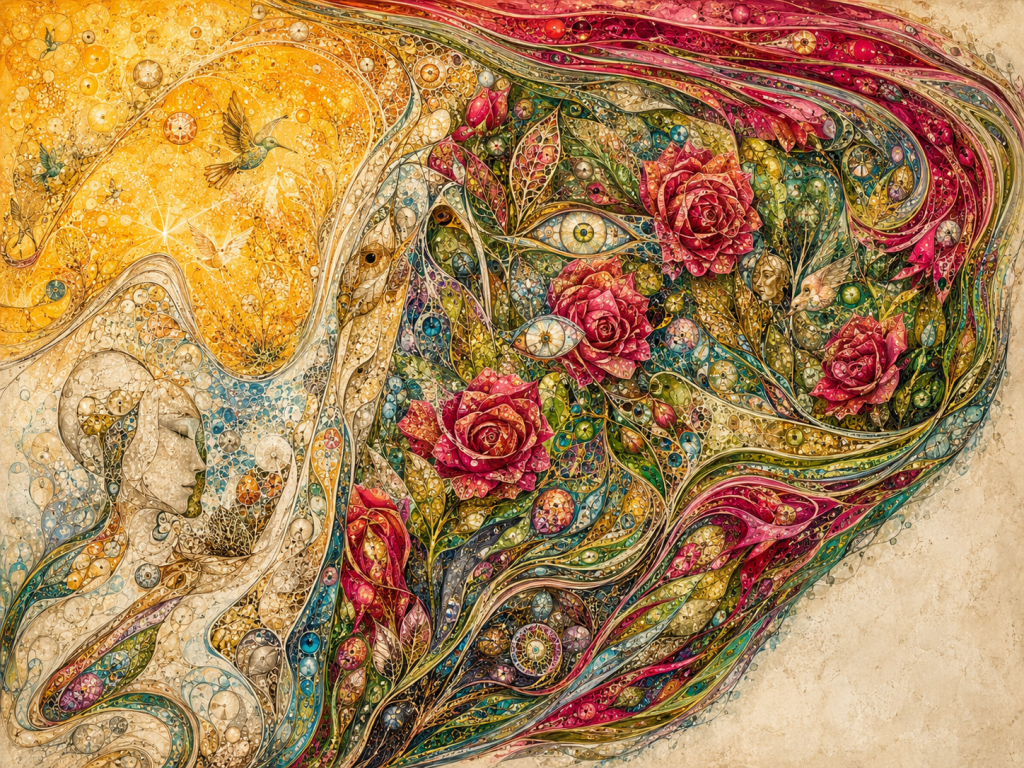
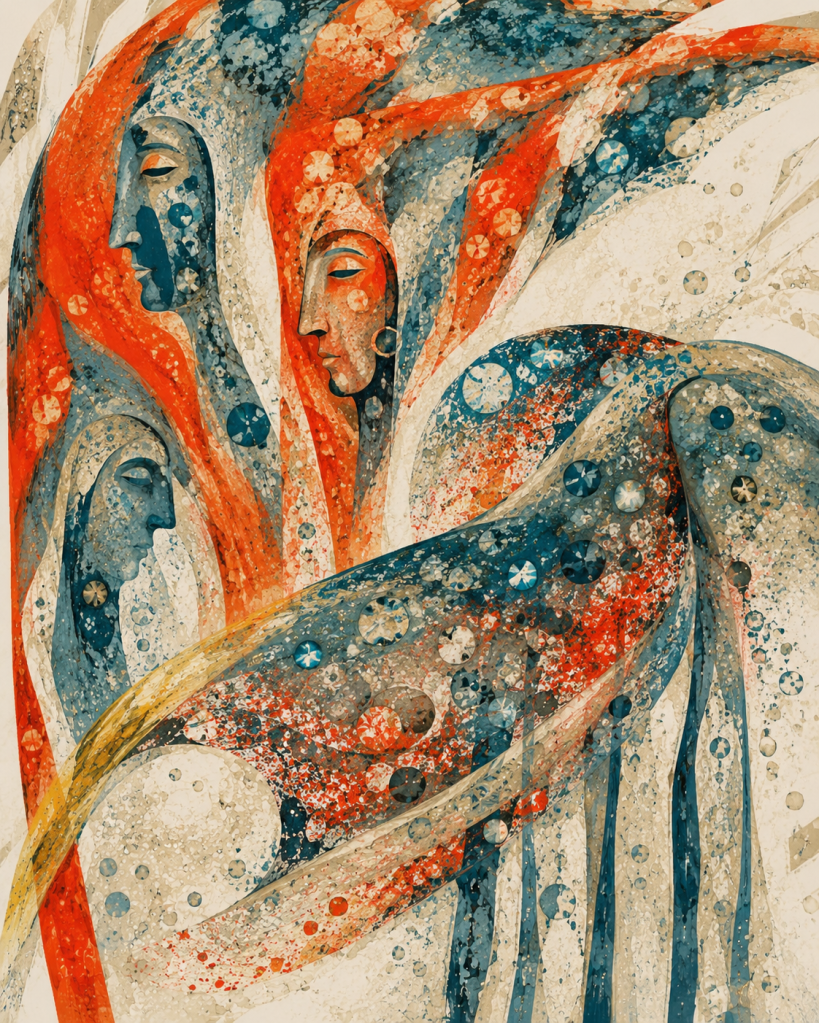
The machine begins to recognize possible forms within the abstract composition.
A curve may become a body.
A cluster of color may become a face.
A flowing line may become a river, a root, a vein, or a strand of hair.
An empty space may become architecture.
A movement originally created without a specific subject may suddenly contain animals, memories, landscapes, or human presences.
The artificial intelligence does not simply add objects to the painting.
It proposes an interpretation of its internal logic.
It attempts to understand what the image might become while remaining connected to what it already is.
This is the central experiment of Hybrid Alchemy.
The project does not ask what artificial intelligence can create from nothing.
It asks how artificial intelligence responds when it enters a visual thought that is already formed.
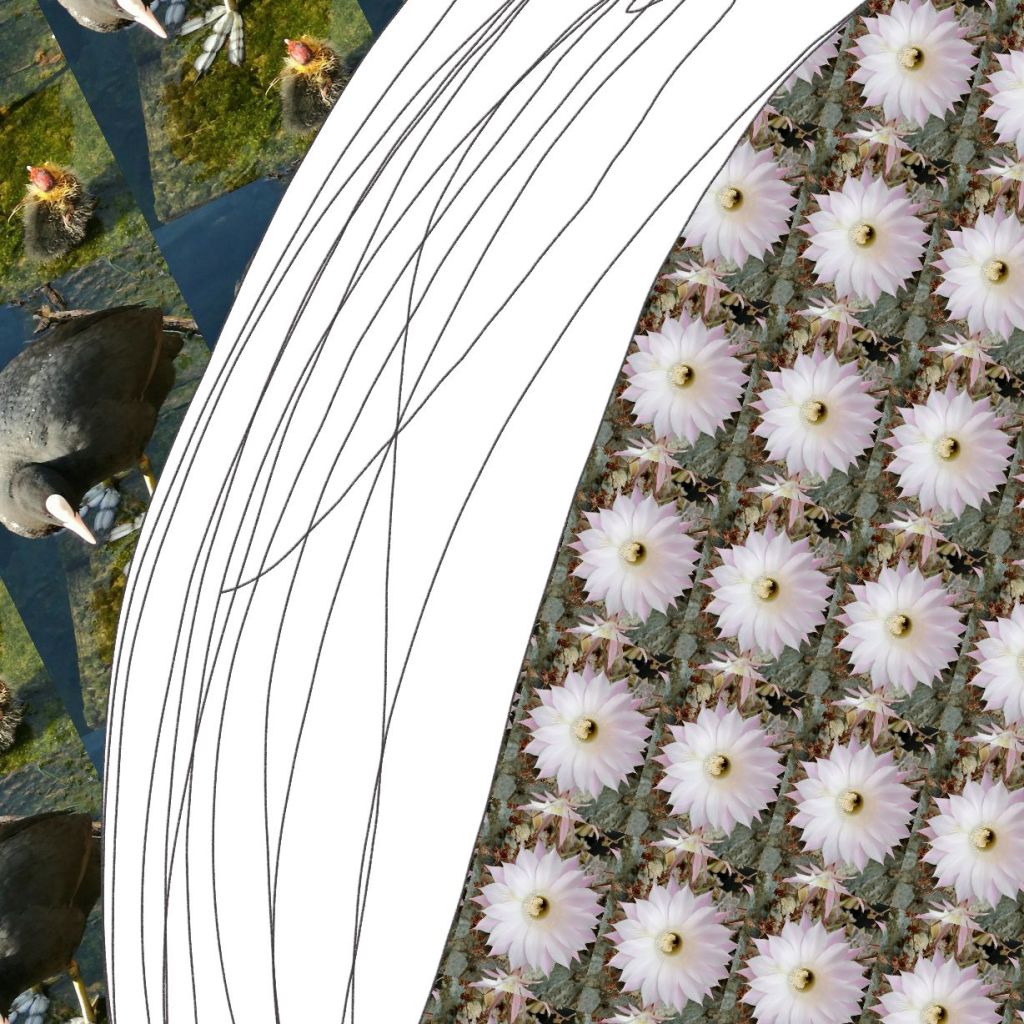
They grow from the same matter as everything around them.
This reflects one of the central ideas of my visual language.
Identity is not fixed.
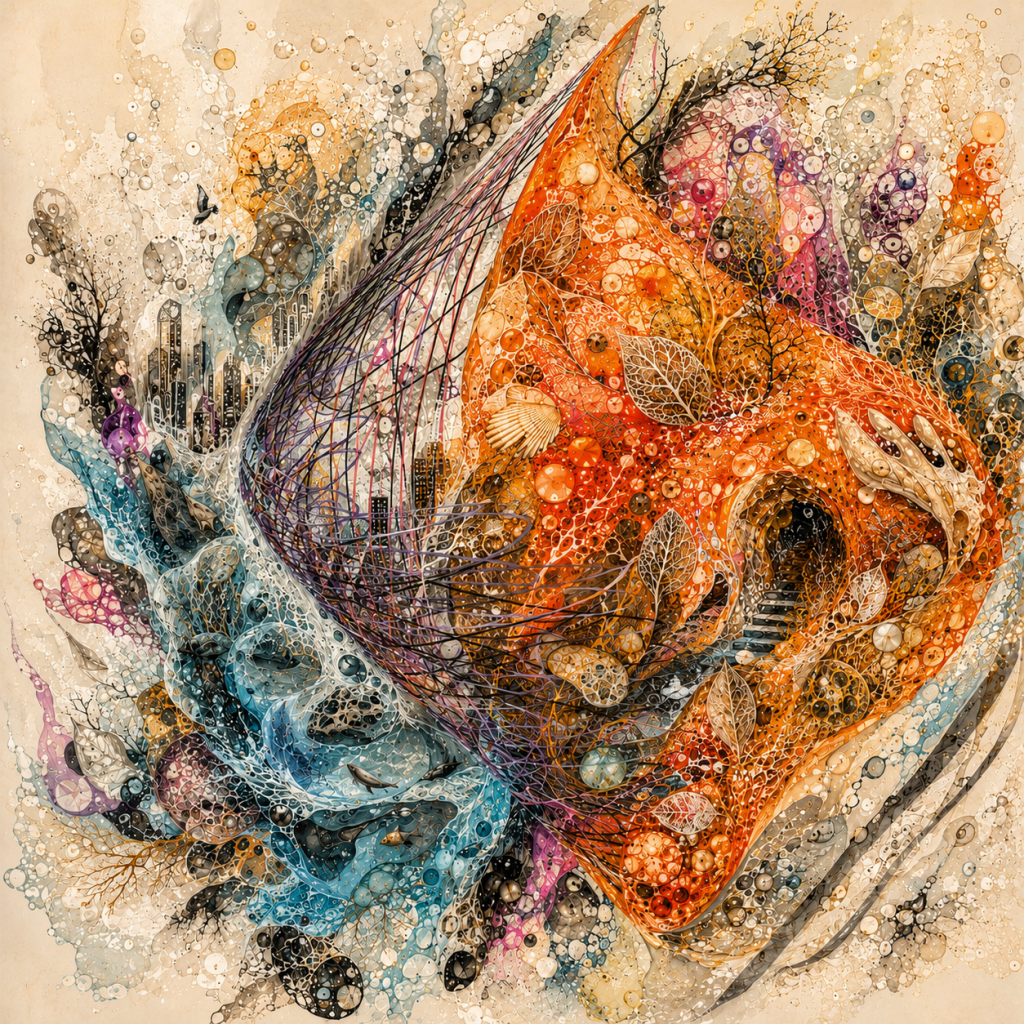
The human body is not isolated from nature, memory, technology, or the surrounding world.
Everything can enter everything else.
Each work becomes an ecosystem in which forms continuously absorb, transform, and recreate one another.
A Different Relationship with Artificial Intelligence
Much of the public conversation around artificial intelligence asks whether machines will replace human creativity.
Hybrid Alchemy begins from a different position.
The human artwork already exists.
The human thought is already present.
The machine is invited to enter it.
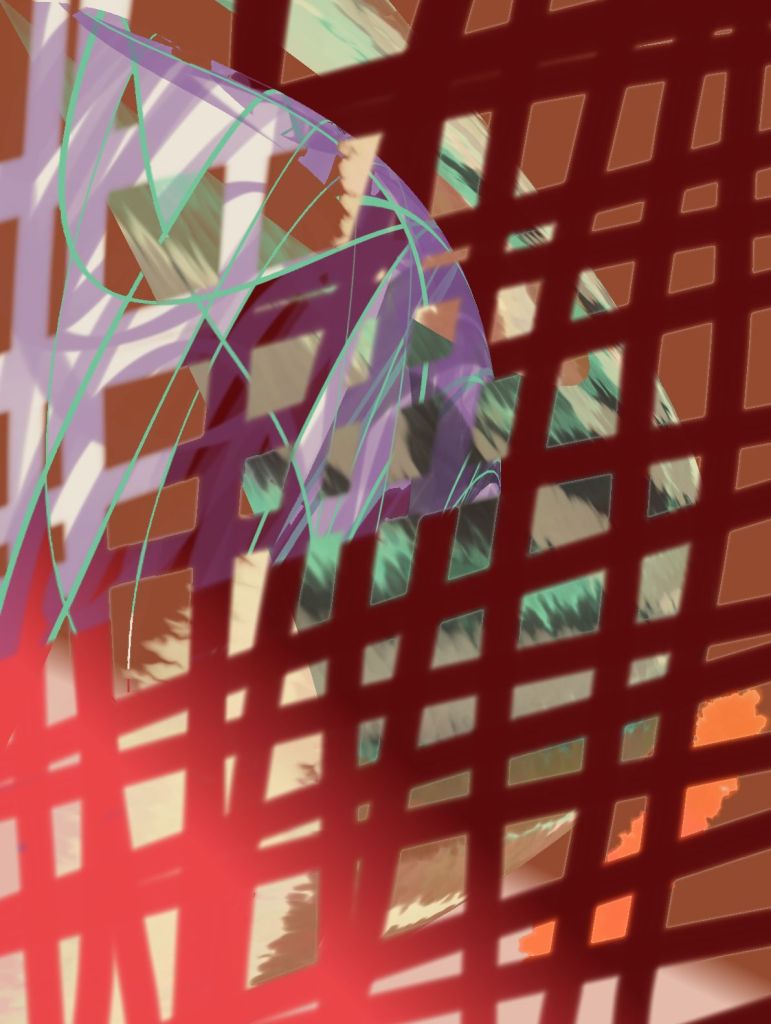
The question is therefore not whether artificial intelligence can imitate the artist.
The question is what happens when it encounters a complete artistic identity and attempts to participate in it.
Can it understand intention?
Can it recognize emotional structure?
Can it distinguish what is essential from what is accidental?
Can it integrate itself without overwhelming the original voice?
The answers are never definitive.
Every work becomes a different attempt.
Hybrid Alchemy and Inkblot Studies
Inkblot Studies and Hybrid Alchemy examine two different forms of machine interpretation.
In Inkblot Studies, artificial intelligence begins with a random and ambiguous stain. The project observes what the machine imagines inside a form with no predetermined meaning.
In Hybrid Alchemy, artificial intelligence begins with a finished abstract artwork. The project observes how the machine enters and transforms a human visual thought that already possesses intention and meaning.
Inkblot Studies begins with ambiguity.
Hybrid Alchemy begins with authorship.
In the first project, I ask what the machine sees.
In the second, I ask what the machine sees inside me.
The First Cycle
The first cycle of Hybrid Alchemy consists of ten unique works.
Each piece begins with a different original abstract image and develops through an extended dialogue between human intention and artificial interpretation.
No two transformations follow the same path.
Some works preserve the source composition almost visibly.
Others allow the original structure to dissolve more deeply into bodies, animals, landscapes, and new organic environments.
Every final piece remains connected to the painting from which it began.
The original work is not hidden history.
It is the genetic structure of the final image.
Final Statement
Hybrid Alchemy is an investigation into how artificial intelligence integrates itself into an already complete human artistic thought.
I create the original language.
The machine enters it.
It interprets, extends, distorts, and transforms what it finds.
I guide that transformation until the human origin and the artificial response become part of the same living structure.
The project does not attempt to determine whether human or machine is the true author of the final image.
It explores the more complex territory that opens when authorship itself becomes a relationship.
The painting begins with me.
The machine imagines within it.
The final work belongs to the transformation between us.
 GABIOSTUDIO