What does a machine imagine when a form has no predetermined meaning?
Inkblot Studies is an artistic investigation into the way artificial intelligence interprets ambiguity.
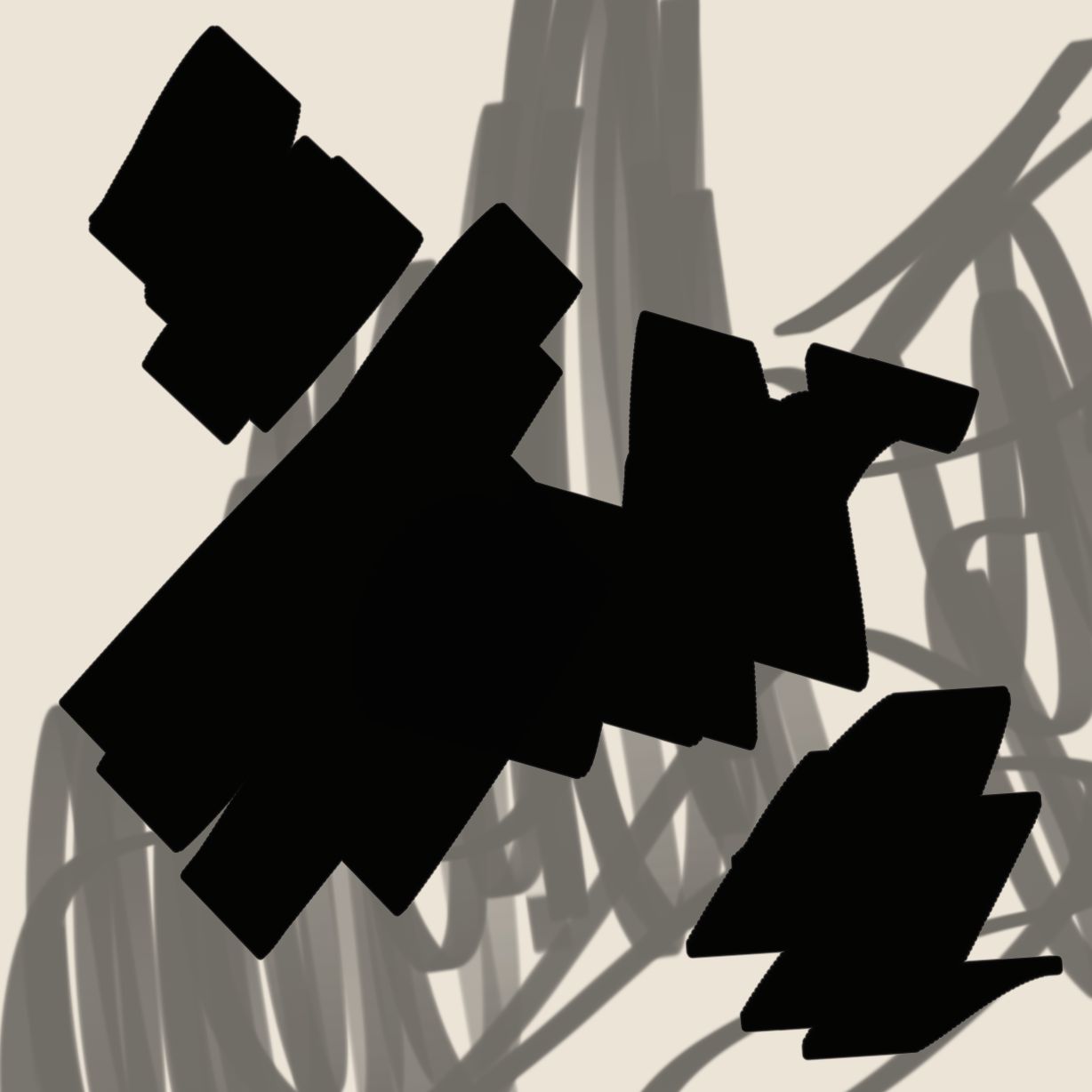
Inkblot Studies
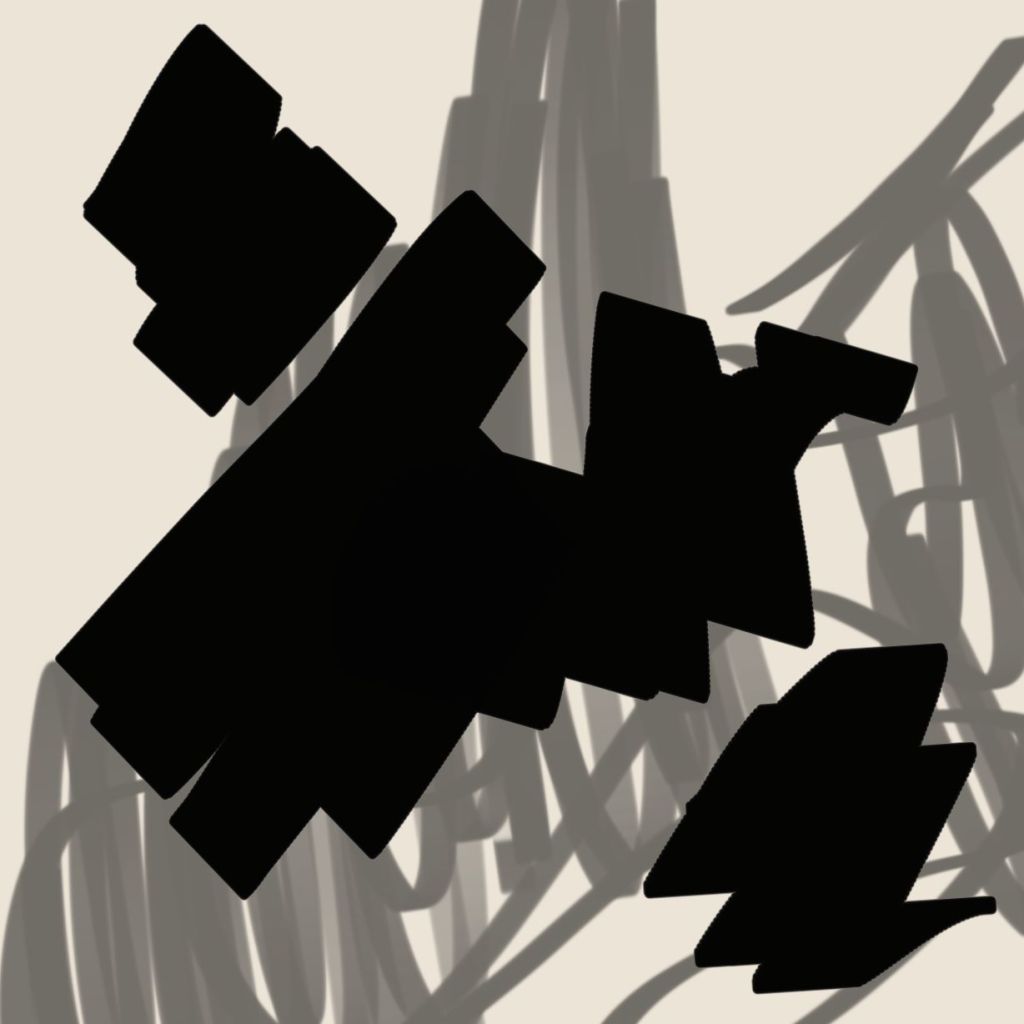
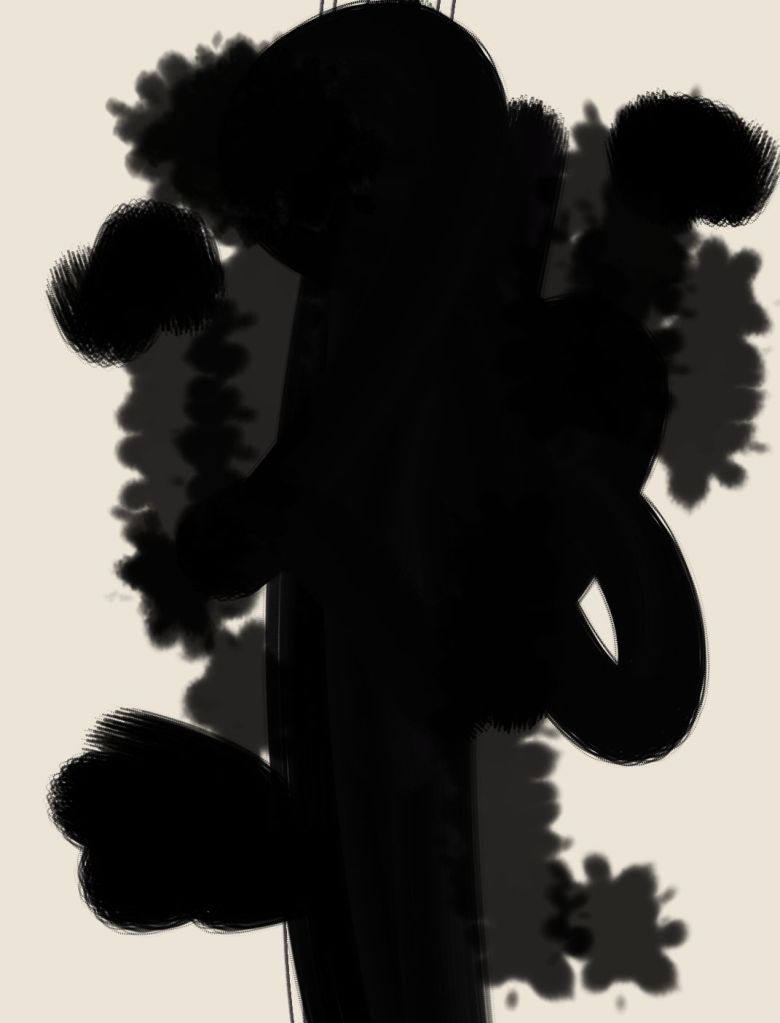
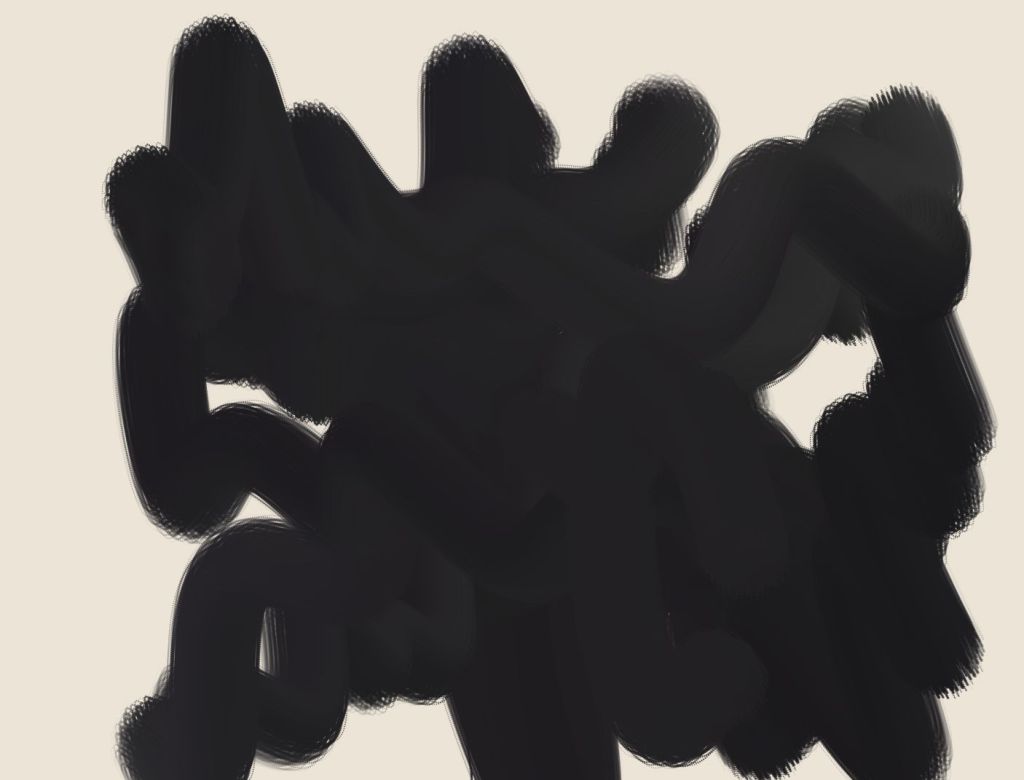
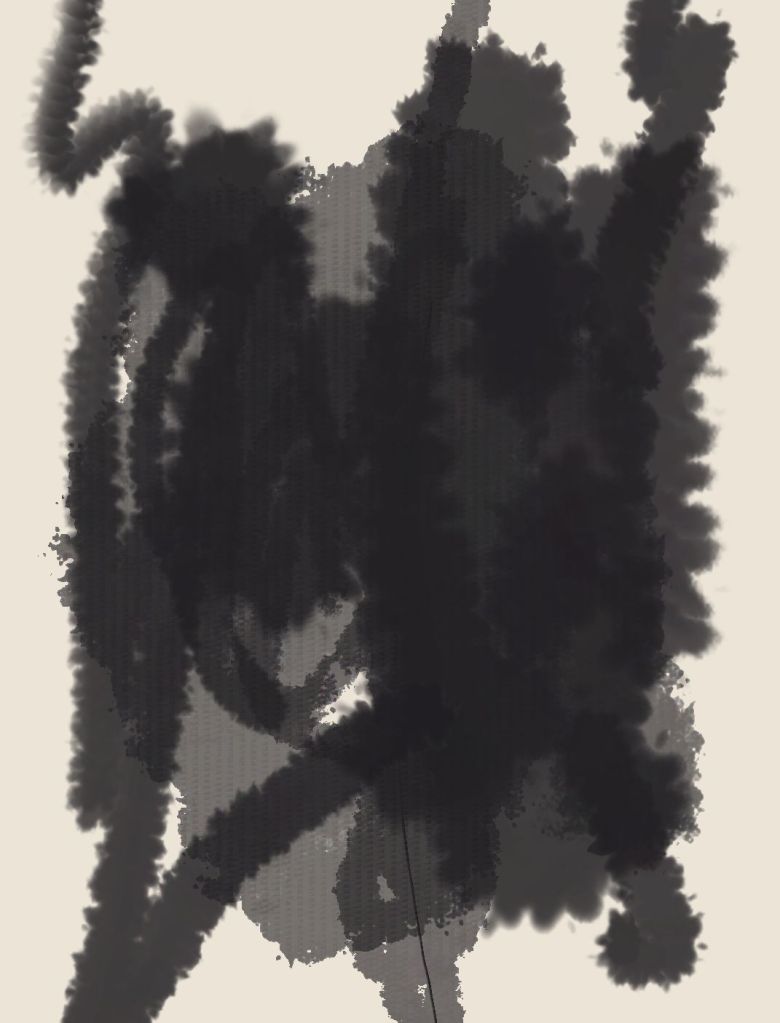
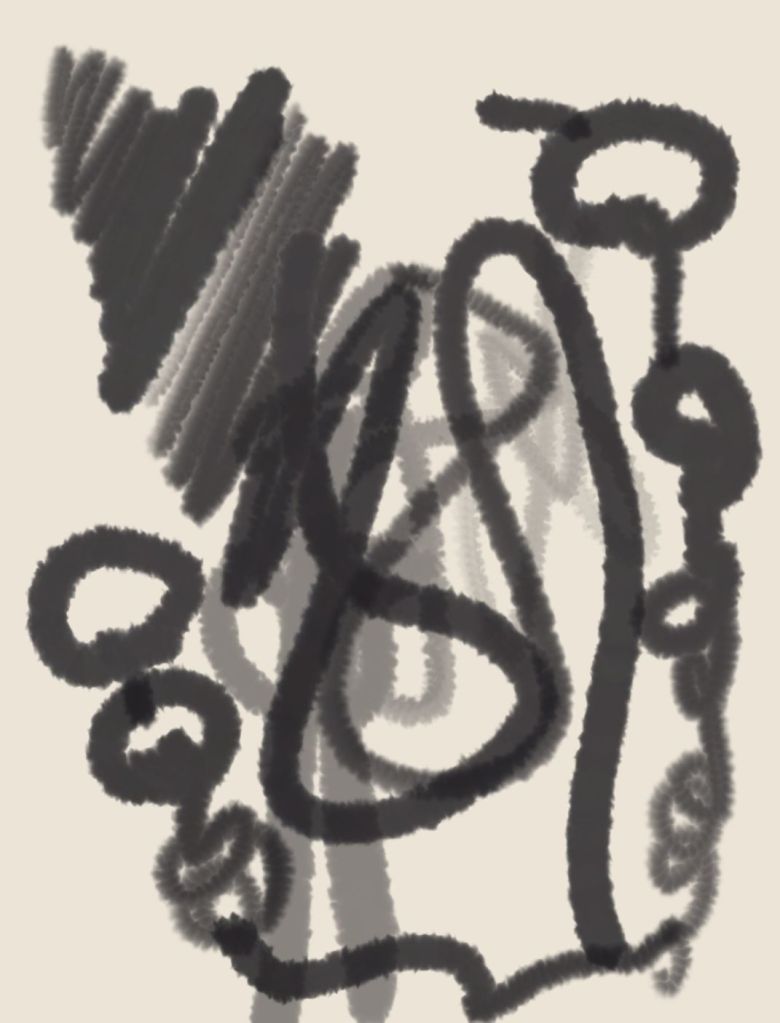
The project begins with a simple visual event: a random black and white stain.
At this initial stage, the image has no assigned subject, no narrative, and no predetermined meaning. It is only a field of shapes, contrasts, symmetries, accidents, and possible suggestions.
The stain does not represent anything specific.
Yet the human mind instinctively searches within it for something familiar. A face, an animal, a landscape, a body, a gesture, or the fragment of a memory may suddenly appear where no conscious intention placed it.
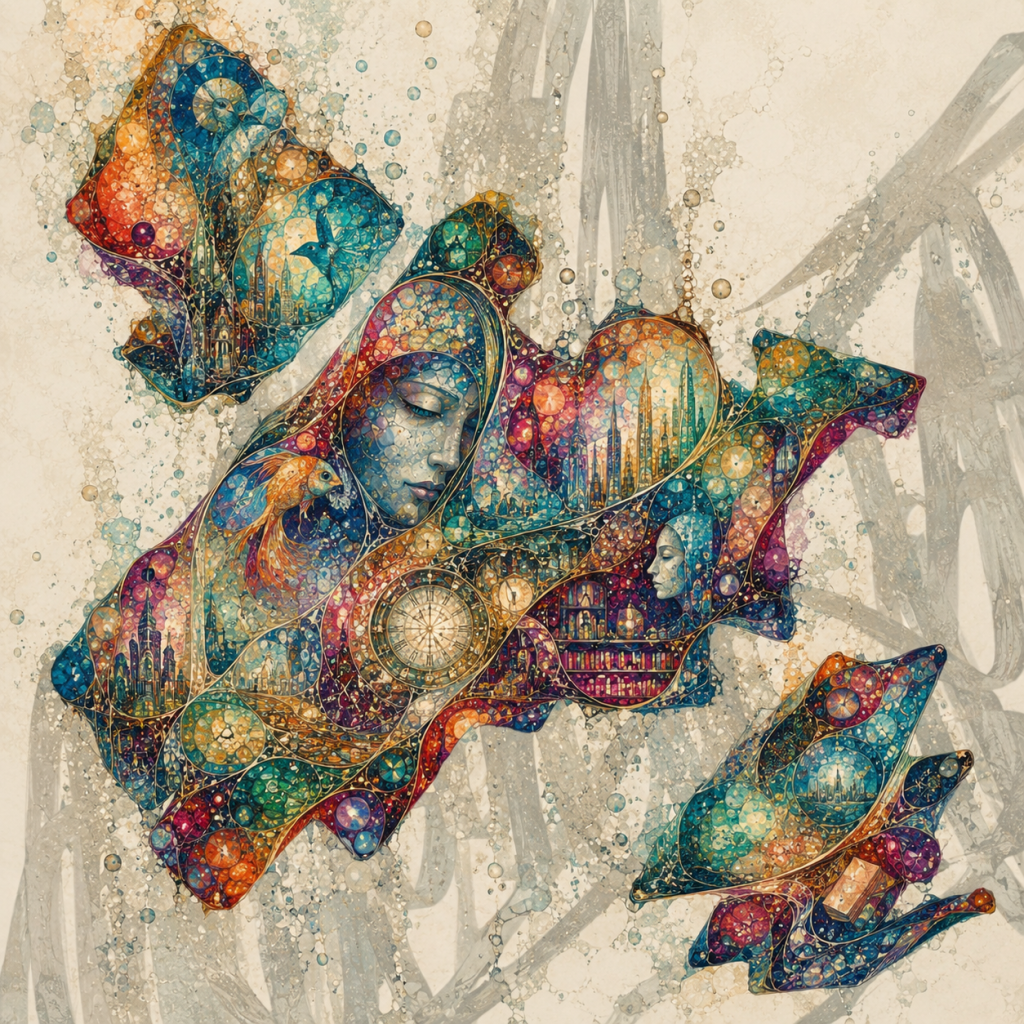
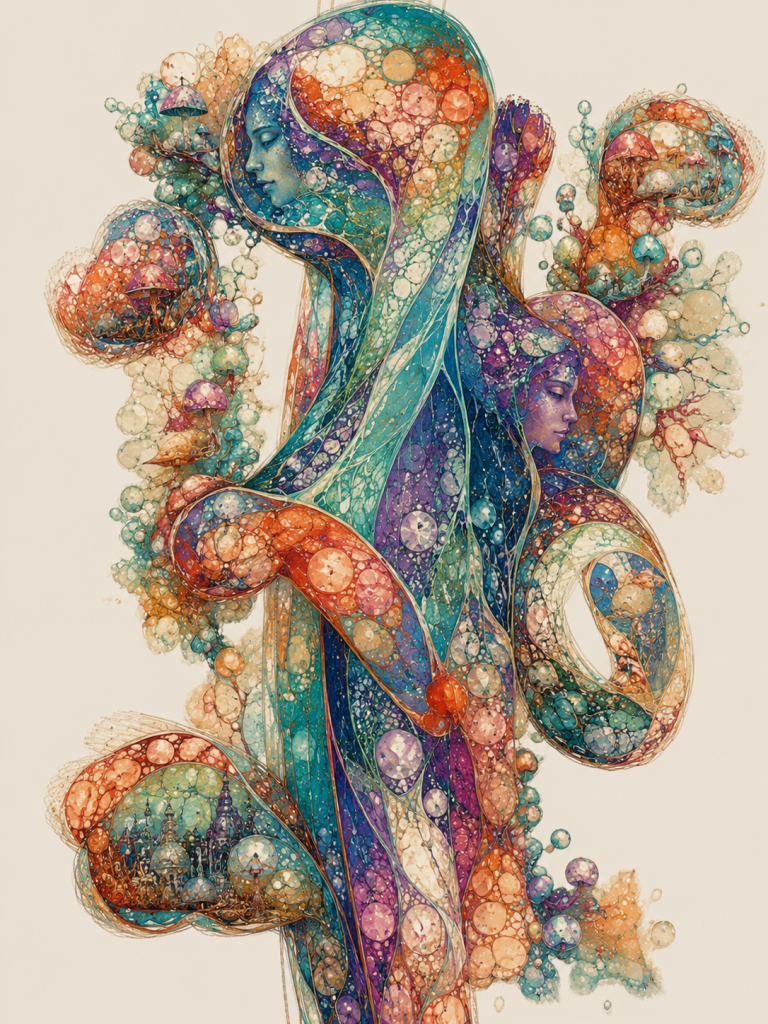
What does artificial intelligence recognize inside an ambiguous form?
Which connections does it create?
Which worlds does it imagine when it is given no explicit subject to reproduce?
The Machine as Observer
Each original stain is presented to an artificial intelligence trained on my own painterly language.
This is essential to the project.
The machine does not interpret the image through a neutral or universal visual vocabulary. It encounters the stain through a language already shaped by my colors, textures, organic structures, cellular forms, flowing lines, and recurring relationships between bodies, nature, architecture, and memory.
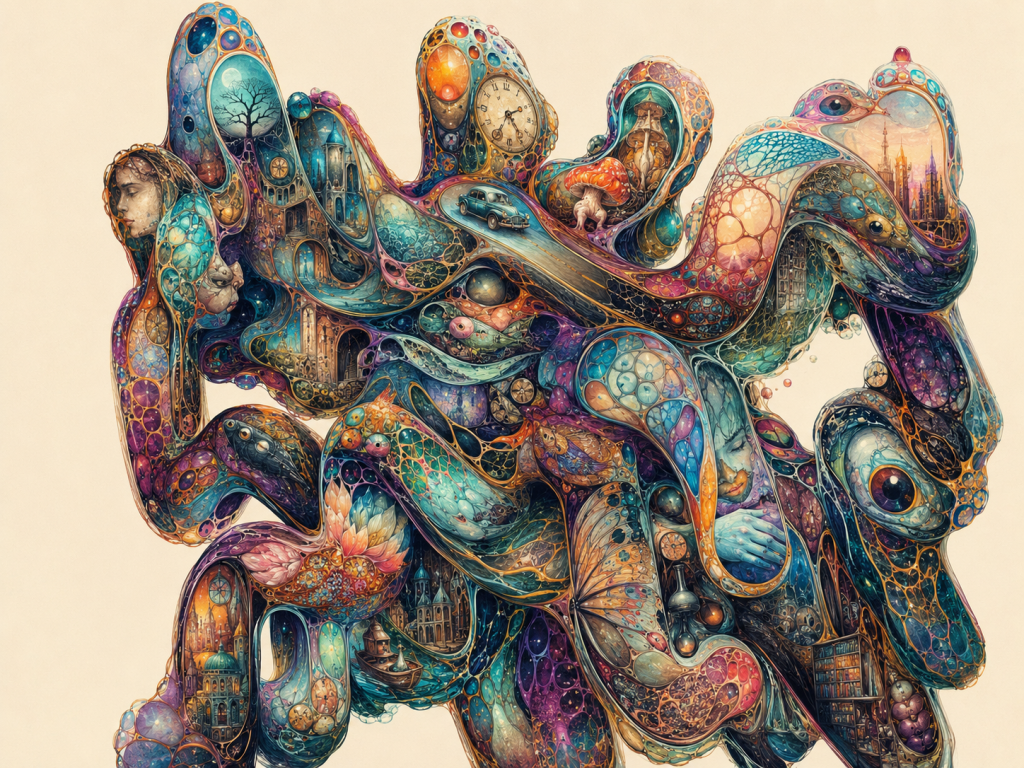
Inkblot Studies asks what happens when the observer is no longer human.
The artificial intelligence therefore becomes a strange kind of observer.
It looks at something random, but it has learned to see through the traces of my artistic identity.
The resulting image exists between two different forms of vision.
The first belongs to the artist who creates the ambiguous stimulus.
The second belongs to the machine that attempts to organize that ambiguity into a recognizable world.
From Accident to Image
The process begins with chance.
A stain forms without illustrating a specific idea. Its internal balance, empty spaces, density, and movement become the raw material of the experiment.
The artificial intelligence is then invited to interpret that structure.
It may discover figures that were never consciously drawn. It may transform a dark area into a face, a curve into an animal, a fracture into architecture, or a cluster of shapes into an entire landscape.
These interpretations do not emerge from a hidden machine subconscious.
Artificial intelligence does not dream or project in the same way a human being does. It responds through patterns, associations, and visual relationships learned from images.
The project uses the metaphor of projection not to humanize the machine, but to examine the way it organizes uncertainty.
Its responses reveal something about the visual culture from which it learned and about the artistic language through which it has been trained to respond.
The Role of the Artist
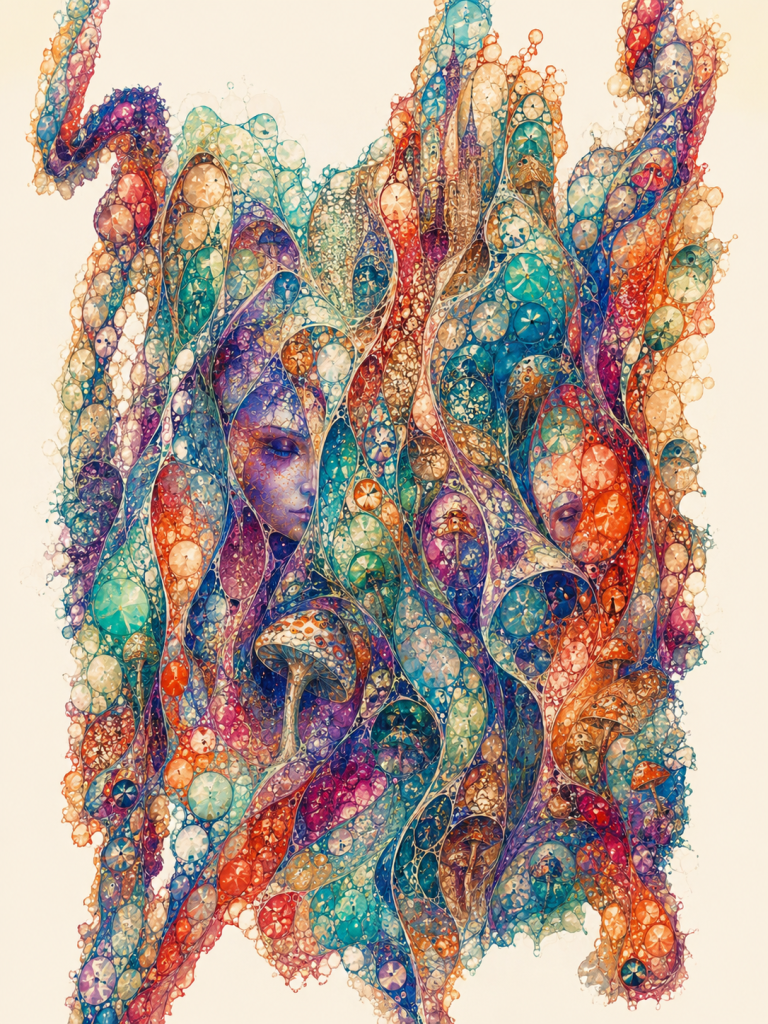
The artist does not disappear from this process.
I create the initial stain.
I establish the visual language through which the machine interprets it.
I decide how to question the image.
I observe the possible responses.
I select, reject, refine, and direct the transformations.
The final work is therefore neither a simple human composition nor an autonomous machine image.
It is the record of an encounter.
Chance creates the question.
Artificial intelligence proposes an interpretation.
Human judgment determines what becomes visible.
The artwork emerges from the tension between these three forces.
Seeing Within the Undefined
Inkblots have always been connected to the human desire to find meaning inside uncertainty.
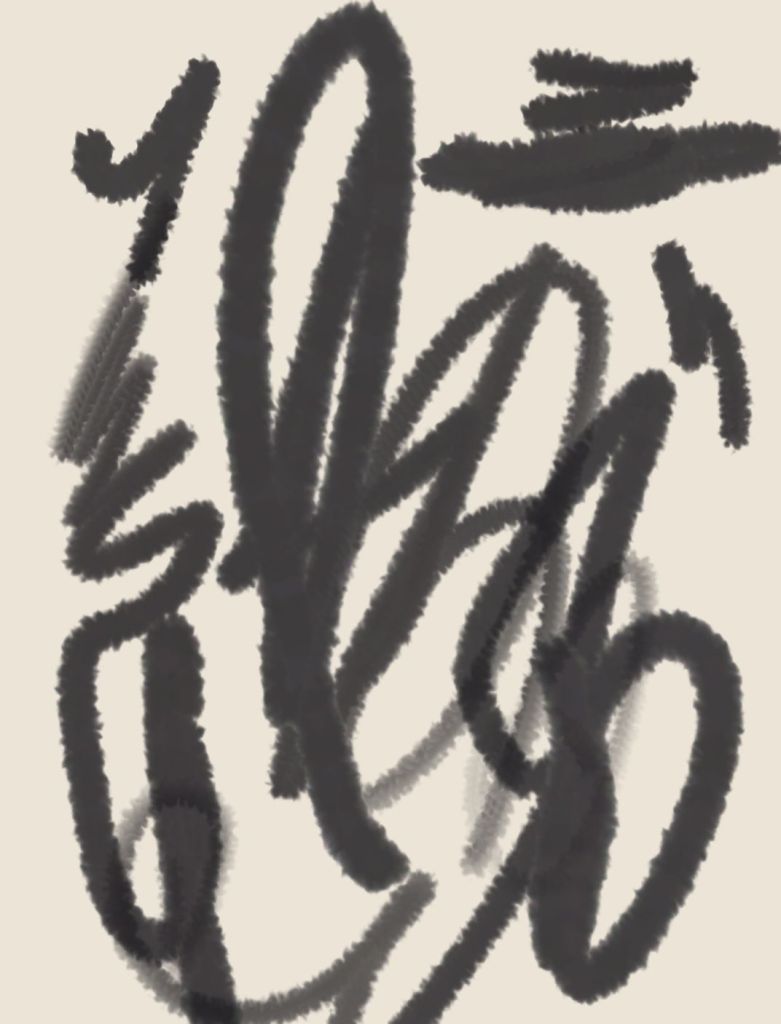
We rarely accept an undefined form as completely empty. We search for presences within it. We complete what is incomplete. We transform visual noise into stories.
Artificial intelligence performs a different version of this act.
It does not interpret the stain through personal memories, childhood, fear, or desire. It interprets through accumulated visual patterns and statistical associations.
Yet its answers can still appear emotional, symbolic, mysterious, or strangely intimate.
This contradiction lies at the heart of Inkblot Studies.
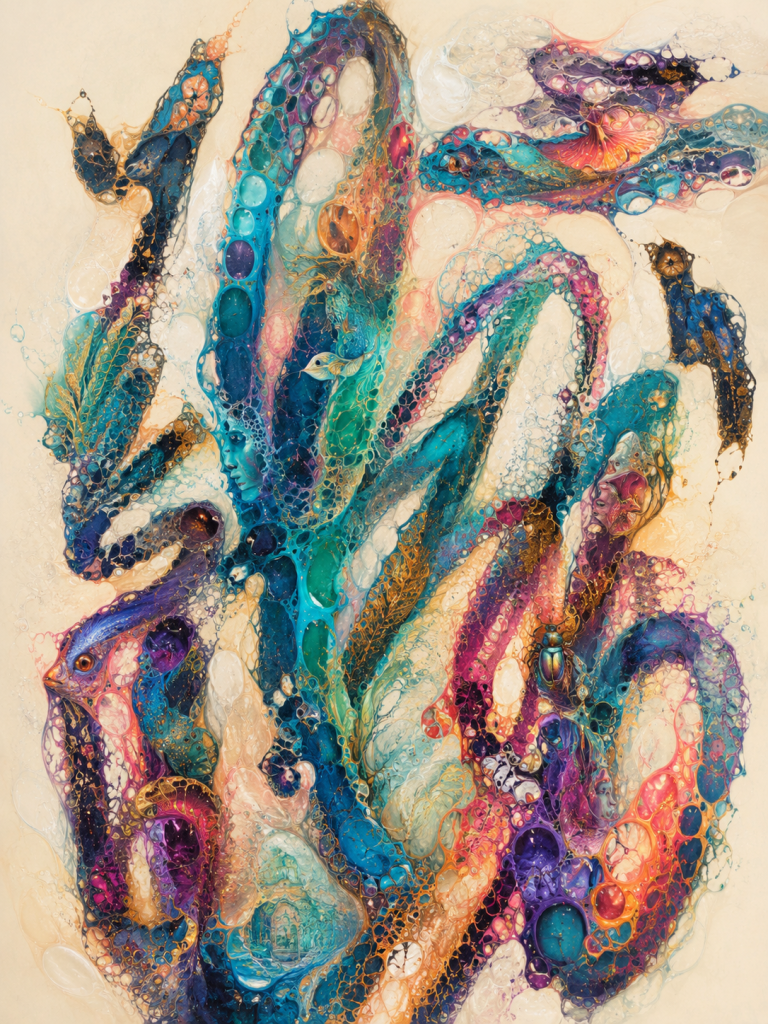
How can a system without personal experience create an image that awakens personal experience in us?
When we feel emotion before a machine interpretation, where does that emotion truly originate?
Does it belong to the image, to the artist, to the machine, or to the person observing the final work?
A Mirror with More Than One Reflection
Each work begins as an open question.
The stain becomes a mirror, but it does not reflect only one mind.
It reflects the artist who created the stimulus.
It reflects the machine and the visual culture contained within its training.
It reflects the viewer, who will inevitably discover new figures and meanings inside the final image.
The project therefore creates several layers of interpretation.
The artist sees the stain.
The machine sees the artist’s visual language within the stain.
The audience sees something new inside the machine’s response.
Meaning does not remain fixed at any stage. It passes from one observer to another, changing each time it is perceived.
The First Cycle
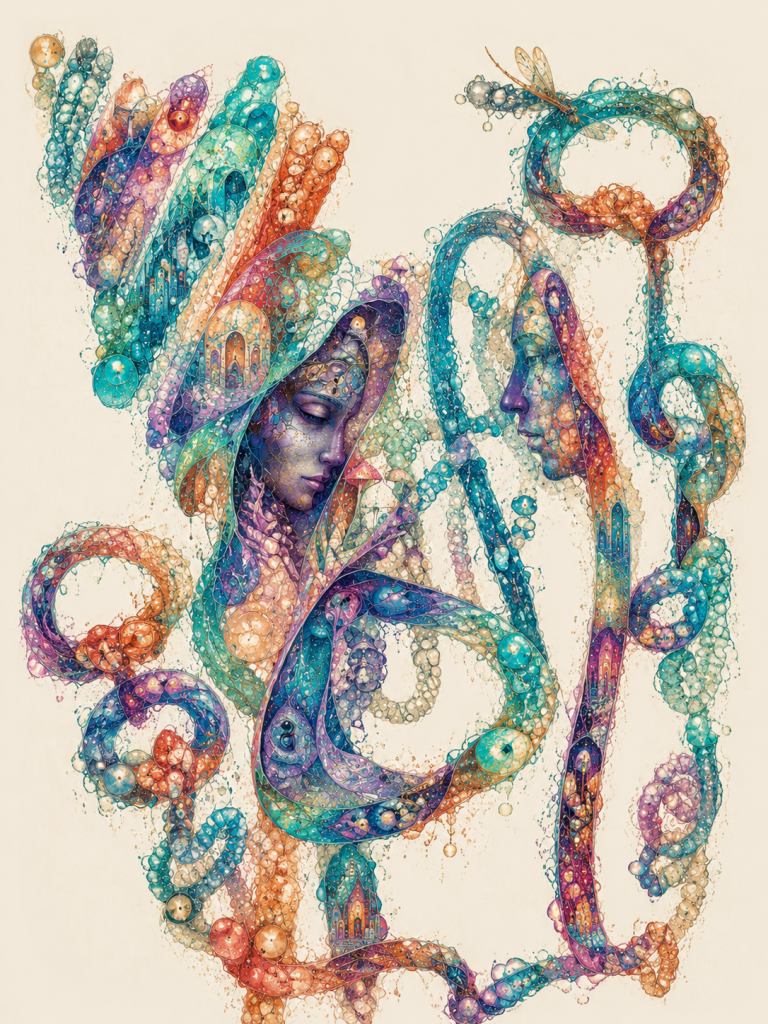
The first cycle of Inkblot Studies consists of ten works.
Each piece begins with a different random black and white stain and develops into a distinct interpretation through an artificial intelligence trained on my painterly style.
Although the works share the same method, each one opens a different visual territory.
Some interpretations may feel organic.
Others may suggest bodies, creatures, landscapes, architecture, memories, or impossible environments.
The original ambiguity is never completely erased. It remains beneath the final image as an invisible structure, continuing to guide the composition even after the stain has transformed into something apparently recognizable.
The viewer is invited to reverse the process.
Instead of only observing what the artificial intelligence created, the viewer may search for the original stain hidden within the completed work.
An Experiment in Machine Imagination
Inkblot Studies is not a psychological test and does not attempt to diagnose artificial intelligence.
It is a visual and conceptual experiment.
It explores how a machine trained on a specific artistic language responds to forms that contain no explicit instruction about what they should become.
The project is ultimately concerned with interpretation.
It asks how meaning is created from ambiguity, how visual identity influences perception, and how human intention can coexist with artificial association.
The machine does not simply complete an image.
It reveals one possible way of seeing it.
And every interpretation leaves the original question open.
Final Statement
Inkblot Studies explores the space between accident and intention, between human authorship and machine interpretation.
I give the artificial intelligence a form without a predetermined meaning.
The machine responds through a visual language learned from my work.
I then observe what it believes it has found.
The result is not an answer.
It is another image in which artist, machine, and viewer can continue searching.
I create the ambiguity.The machine imagines within it.The viewer decides what remains.
 GABIOSTUDIO